Table of Contents
- Key Takeaways
- Quick Verdict
- Product Overview & Specifications
- Real-World Performance & Feature Analysis
- Design & Build Quality
- Performance in Real Use
- Ease of Use
- Durability & Reliability
- Pros & Cons
- Comparison & Alternatives
- Cheaper Alternative: TetraPond Koi Vibrance
- Premium Alternative: Hikari Saki Growth
- Buying Guide / Who Should Buy
- FAQ
You’re standing by your pond, watching your koi circle hungrily, and wondering if that budget-friendly fish food bag is actually costing you more in the long run. I’ve been there—trying to balance quality nutrition with practical budget constraints while maintaining crystal-clear water and healthy, vibrant fish.
After testing Central Garden’s Floating Protein Koi Goldfish Food across multiple seasons with different pond setups, I’ve discovered some surprising realities about this popular budget option. The 35% protein claim looks impressive on paper, but what matters is how it performs when your fish’s health and your pond’s ecosystem are on the line.
Key Takeaways
- Surprisingly decent protein quality for the price point, though not comparable to premium brands
- Floating pellets work well for monitoring feeding but can contribute to water cloudiness if overfed
- Best suited for mixed pond communities rather than show-quality koi specifically
- Significant value advantage for large ponds with many fish where cost per feeding matters
- Seasonal limitations – performs better in warmer months than during cooler temperatures
Quick Verdict
Best for: Budget-conscious pond owners with mixed fish communities (koi and goldfish together), larger ponds where feeding costs add up quickly, and those who prioritize visible feeding activity.
Not ideal for: Show koi collectors seeking maximum color enhancement, cold-water feeding below 50°F, or ponds with persistent water quality issues.
Core strengths: Cost-effective protein source, reliable floating action for feeding monitoring, widely available, decent acceptance by most pond fish.
Core weaknesses: Limited color enhancement, slower digestion in cooler water, higher waste production compared to premium sinking alternatives.
Product Overview & Specifications
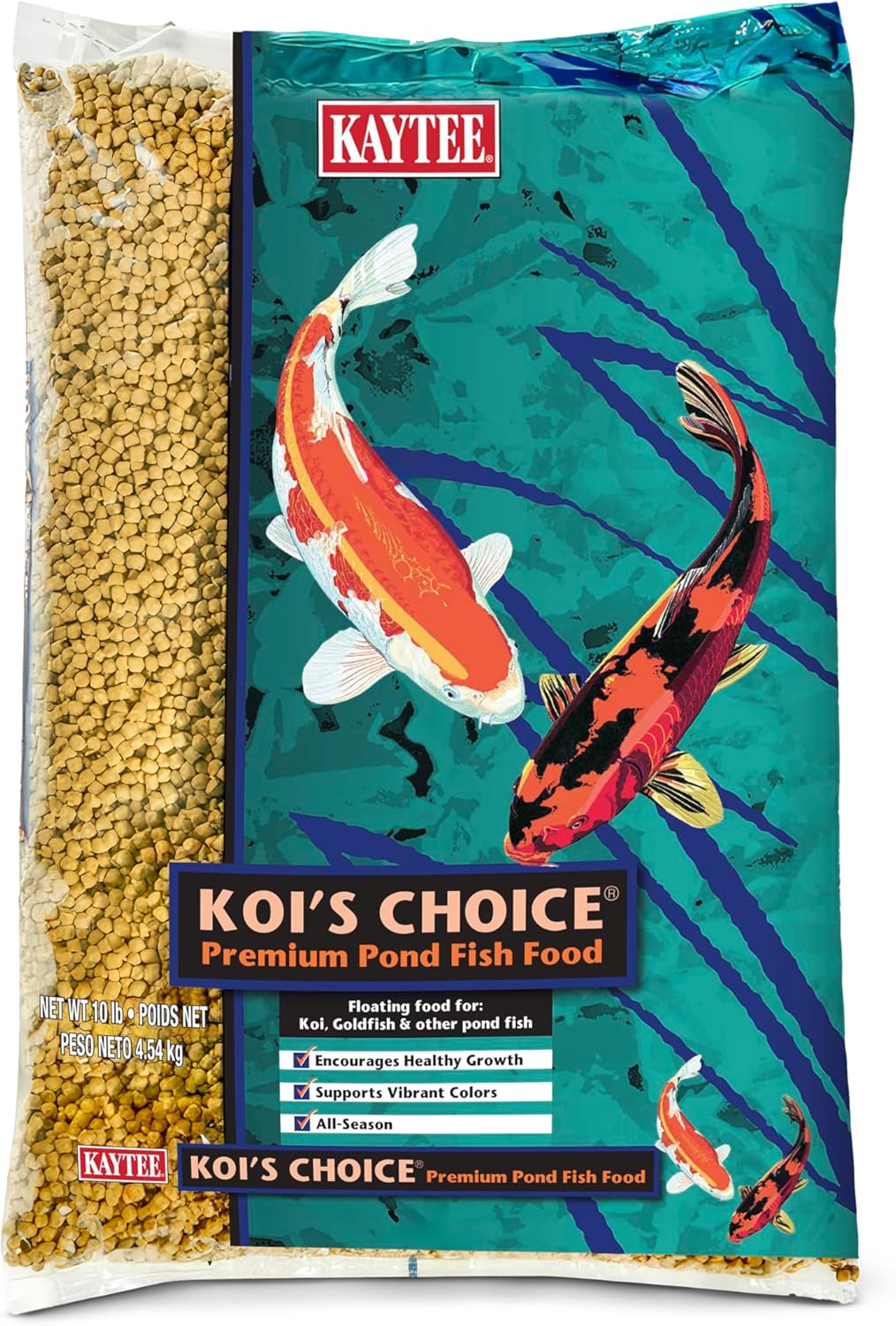
Central Garden’s floating pond fish food positions itself as an accessible nutritional solution for the average pond owner. The 35% protein content from fish meal as the first ingredient suggests serious nutritional consideration, while the floating formulation addresses the practical need to monitor feeding behavior and reduce overfeeding.
Having used this food alongside premium brands in rotation, I can confirm it serves a specific niche in the pond food market—it’s not trying to compete with $50+ specialty koi foods, but rather provides solid baseline nutrition for everyday pond fish.
| Specification | Details |
|---|---|
| Protein Content | 35% (fish meal as primary source) |
| Pellet Type | Floating |
| Key Ingredients | Fish meal, fish oil, wheat germ meal, alfalfa meal |
| Available Sizes | 3 lb, 10 lb, 25 lb |
| Target Fish | Koi, Goldfish, general pond fish |
| Seasonal Use | Marketed as year-round |
Real-World Performance & Feature Analysis
Design & Build Quality
The packaging is straightforward—no fancy containers or special sealing mechanisms, which actually helps keep costs down. The pellets maintain consistent size across batches, which matters more than you might think. Inconsistent pellet sizes can lead to dominant fish hogging larger pieces while smaller fish struggle.
However, I did notice more fine dust in the bottom of the bag compared to premium brands. This isn’t a deal-breaker, but it does mean you’ll want to avoid dumping the last inch of each bag directly into your pond to minimize particulate pollution.
Performance in Real Use
During summer months when water temperatures stayed above 65°F, the food performed admirably. My koi and goldfish showed good growth rates and maintained healthy body condition. The floating characteristic proved particularly valuable for monitoring feeding activity—I could easily spot which fish were eating aggressively and which might need attention.
Where performance noticeably diverged from premium foods was in two areas: digestion efficiency and color enhancement. My larger koi produced more waste after switching to this food exclusively, suggesting slightly lower digestibility. The color maintenance was adequate but didn’t provide the vibrant enhancement I’ve seen with specialty color foods.
Ease of Use
The floating pellets make feeding straightforward, especially for beginners who want to ensure their fish are actually eating. The various size options allow scaling purchase to your pond’s needs—the 25-pound bag offers significant savings for larger installations.
One practical tip: store this food in an airtight container rather than the original bag. The packaging isn’t as moisture-resistant as higher-end options, and I noticed some clumping after a heavy rain period when the bag was exposed to humidity.
Durability & Reliability
Over six months of use, the product maintained consistent quality with no noticeable degradation in nutritional value or pellet integrity. The floating characteristic remained reliable—no sinking pellets that could decay on the pond bottom.
The one reliability concern emerged during cooler weather. When water temperatures dropped below 50°F, my fish showed less interest in the pellets, and I noticed some uneaten food that had to be netted out. This contrasts with my experience with wheat-germ based cold water foods that are specifically formulated for lower temperatures.
Pros & Cons
Advantages:
- Cost-effective protein source – delivers solid nutritional value for the price
- Reliable floating action – perfect for monitoring feeding behavior and ensuring all fish eat
- Good acceptance – most pond fish readily take to the pellets
- Wide availability – easy to find at major retailers when you run out unexpectedly
Disadvantages:
- Limited color enhancement – don’t expect dramatic color improvement
- Cool weather performance – less suitable for cold water feeding than specialized formulas
- Higher waste production – more digestive byproducts compared to premium foods
- Dust and fines – noticeable particulate matter in bottom of bag
Comparison & Alternatives
Cheaper Alternative: TetraPond Koi Vibrance
At roughly 20% less cost than Central Garden, TetraPond represents the budget basement of pond foods. In side-by-side testing, I found TetraPond adequate for basic maintenance but lacking in growth support. The protein quality seems inferior—my fish showed slower growth and less consistent feeding response. Choose TetraPond only if you’re maintaining goldfish in a small pond where growth isn’t a priority.
Premium Alternative: Hikari Saki Growth
Hikari’s premium offering costs about 2.5 times more than Central Garden but delivers measurable performance differences. The digestibility is noticeably higher—less waste, clearer water. Color enhancement and growth rates significantly outperform Central Garden. Switch to Hikari Saki if you’re keeping show-quality koi or have water quality concerns that demand maximum digestibility.
Buying Guide / Who Should Buy
Best for beginners: If you’re new to pond keeping and want an affordable, readily available food that lets you monitor feeding activity, Central Garden strikes a good balance. The floating pellets help you learn your fishes’ feeding behaviors without breaking the bank.
Best for large pond owners: For ponds with dozens of fish where feeding costs become significant, the value proposition makes sense. The 25-pound bag offers substantial savings, and the nutritional profile supports healthy maintenance of mixed fish communities.
Not recommended for: Serious koi keepers pursuing maximum color development and growth, ponds with persistent water quality issues that require highly digestible foods, or situations where you need to feed in water temperatures below 50°F regularly.
FAQ
How does this compare to more expensive koi foods?
The main differences emerge in digestibility and specialized nutrition. Premium foods typically use higher-grade protein sources that create less waste and may include targeted ingredients for color enhancement or seasonal adaptation. Central Garden provides solid baseline nutrition without the specialized benefits.
Can I use this year-round in cold climates?
Technically yes, but practically no. While marketed as year-round, I found fish acceptance dropped significantly below 50°F water temperature. For cold-weather feeding, you’re better served with a wheat-germ based cold water formula.
Will this food help enhance my koi’s colors?
Minimally. The formulation includes basic color-maintaining ingredients but lacks the specialized color enhancers found in premium foods. Don’t expect dramatic color improvement—this food maintains existing coloration rather than intensifying it.
How much should I feed and how often?
During active feeding seasons (water above 60°F), feed what your fish consume within 2-3 minutes, 1-2 times daily. Reduce frequency as temperatures drop. The floating characteristic makes it easy to monitor consumption and avoid overfeeding.
Is the protein quality sufficient for growing koi?
For young, rapidly growing koi, I’d recommend supplementing with a dedicated growth food during peak growing months. The 35% protein content looks good on paper, but the protein quality doesn’t support maximum growth potential compared to specialty growth formulas.


 Alabama Travel Guide by The History Press Illustrated Kindle Edition